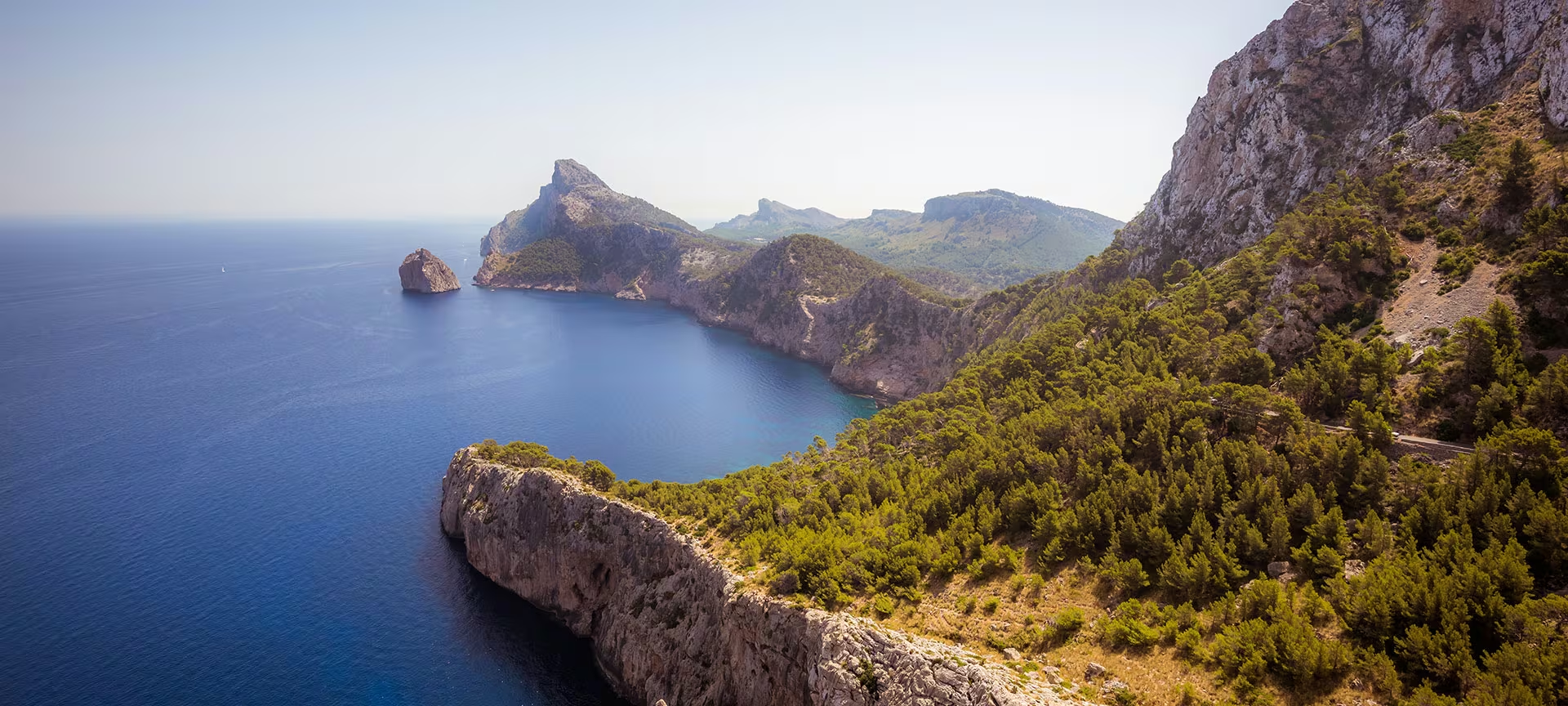

Mallorca is world-famous for its turquoise coves, but the true heart of the island beats in its mountainous backbone: the Serra de Tramuntana.
If you are looking for an authentic experience, away from the summer crowds and connected with nature and history, this northwestern corner of the island is your mandatory destination.
What is the Serra de Tramuntana?: The Serra de Tramuntana is the main mountain range in Mallorca, located in the northwest. It stretches for nearly 90 km from Andratx to Cap de Formentor. Its highest peak is Puig Major (1,445 m). It is not just a natural landscape; it is a UNESCO World Heritage Cultural Landscape(declared in 2011). This distinction recognizes centuries of human interaction with the mountains, visible in its famous dry-stone terraces and ancient hydraulic systems.
In this guide, designed by local Mallorca vacation rental experts, we break down how to explore this wonder: from honey-colored stone villages frozen in time to breathtaking hiking trails.
Must-Visit Villages in the Tramuntana: A Cultural Journey
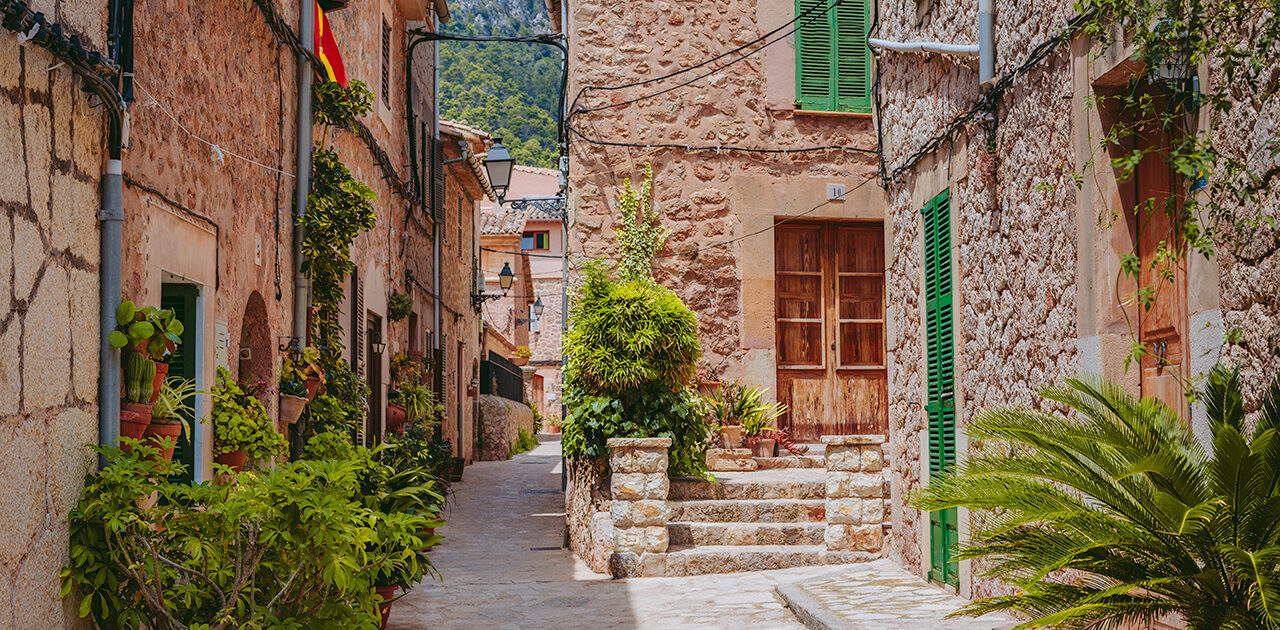
The Tramuntana cannot be understood without its villages. They are nestled in valleys or perched on hillsides, connected by winding roads that are an experience in themselves. If you only have a day or two, these are the ones you shouldn’t miss.
1. Valldemossa: History and Romance
Just 20 minutes from Palma, Valldemossa is the most majestic gateway to the mountains. It is famous for its Royal Charterhouse (La Cartuja), where composer Frédéric Chopin and writer George Sand spent a winter in 1838.
What to see? Stroll through its cobblestone streets lined with flower pots. Don’t leave without trying an authentic “coca de patata” (a sweet, fluffy potato bun) at a local bakery, ideally paired with a thick hot chocolate or a café con leche. Valldemossa is the definition of a “postcard village.”
2. Deià: The Artist’s Retreat
Following the coastal road north, you will find Deià. This small village has been a magnet for artists, musicians, and writers for decades (such as the poet Robert Graves, whose house can be visited).
What makes it special? Its bohemian-chic atmosphere and stunning location. The village is perched on a hill overlooking the Mediterranean. It’s the perfect spot for a gourmet meal or to hike down to the idyllic Cala Deià, a rocky cove with crystal-clear waters and rustic seafood shacks (chiringuitos).
3. Fornalutx: “The Prettiest Village in Spain”
Often cited in lists of the most beautiful villages in Spain, Fornalutx is an architectural gem located in the Sóller valley. It is quieter than Valldemossa and represents the essence of mountain life in Mallorca.
Local tip: Its painted tiles (teules pintades)—decorated with traditional motifs under the eaves—are unique. Take your time getting lost in its narrow stairs and alleys.
4. Sóller and its Port: The Orange Heart
Sóller is the de facto capital of the central Tramuntana. Located in a fertile valley famous for citrus fruits, Sóller is a bustling town with impressive Modernist architecture.
Key experience: The best way to arrive is by taking the historic Wooden Train (Ferrocarril de Sóller) from Palma, dating back to 1912. Once in the town, hop on the vintage tram that connects the center with Port de Sóller, a nearly perfect natural bay with a beach and promenade.
Hiking in the Tramuntana: Routes to Connect with Nature
The Serra de Tramuntana is a hiker’s paradise. It hosts the famous Dry Stone Route (GR221), a long-distance trail crossing the range. However, you don’t need to be an elite athlete to enjoy it.
Here are two excursions for different levels, optimized with clear data:
[Image Suggestion: A hiker looking over a mountain landscape with dry-stone terraces and the sea in the distance. Alt Text: “Hiker on the GR221 Dry Stone Route in the Serra de Tramuntana.”]
Route 1: Barranc de Biniaraix (Intermediate Level)
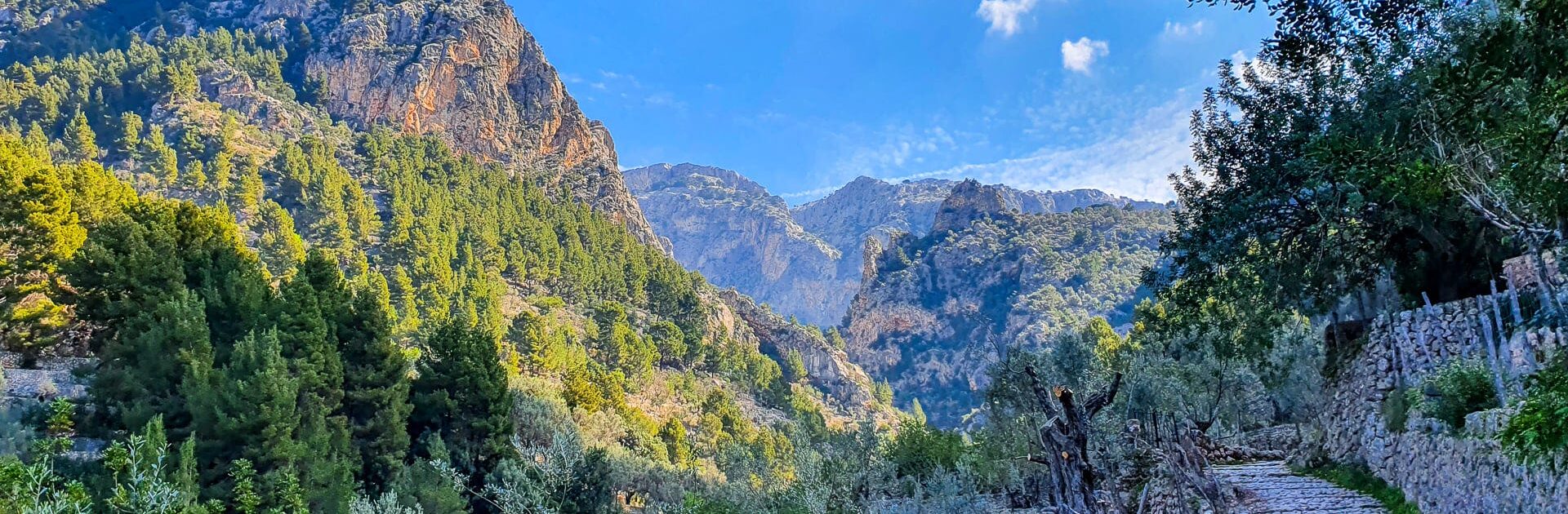
This is perhaps the most iconic route to understand “pedra en sec” (dry stone) engineering. The path is an ancient paved road climbing through a spectacular canyon, surrounded by ancient olive terraces.
Route Key Data:
- Start: Biniaraix village (near Sóller).
- Destination: Coll de l’Ofre and back.
- Distance: Approx. 9 km (round trip to the Coll).
- Estimated Duration: 3.5 – 4 hours.
- Difficulty: Moderate. The path is well-maintained but the ascent is steady and steep.
- Highlights: Canyon views, twisted olive trees, and walking through living history.
Route 2: Castell d’Alaró (Easy/Intermediate Level)
A perfect excursion combining history and 360º panoramic views. The Alaró Castle, situated at over 800 meters, was one of the last strongholds of resistance during various conquests of the island.
Route Key Data:
- Start: From Es Verger restaurant (accessible by car via a rough road).
- Destination: The summit of Castell d’Alaró.
- Distance: Approx. 3 km (from Es Verger).
- Estimated Duration: 1.5 hours (round trip from Es Verger).
- Difficulty: Easy/Moderate. Short but with a steep final climb.
- Highlights: Incredible views of the whole island and the famous roasted lamb at Es Verger restaurant upon your return.
Practical Local Tips for Visiting the Tramuntana (E-E-A-T)
To enjoy the mountains without setbacks, keep this local expert advice in mind:
- The Ma-10 Road: This is the main artery running through the mountains. It is breathtakingly beautiful but narrow and winding (especially the Sa Calobra stretch, famous for its 270-degree “Tie Knot” turn).
- Watch for Cyclists: Mallorca is a world-class cycling destination. In spring and autumn, the roads are filled with pelotons. Drive with extreme caution and patience.
- Parking: In high season (July-August), parking in small villages like Deià or Valldemossa is a challenge. Aim to arrive before 10:00 AM or late in the afternoon.
- Footwear and Water: Even for easy routes, the terrain is rocky. Avoid flip-flops; always wear hiking shoes or boots.
Frequently Asked Questions about the Serra de Tramuntana (FAQ)
What is the best time to visit the Serra de Tramuntana? Spring (March to May) and Autumn (September to November) are ideal. Temperatures are pleasant for hiking (15°C to 25°C). Winter is also beautiful for seeing the almond blossoms in the valleys.
Can I explore the Tramuntana by public transport? Yes, but it’s limited. The TIB bus network connects Palma with major villages (Valldemossa, Sóller, Deià). However, for remote trailheads or coves like Sa Calobra, a rental car offers much more freedom.
Is the Tramuntana suitable for children? Absolutely. Villages like Sóller, with its vintage tram and ice cream shops, are very family-friendly. Routes like the walk around the Cúber Reservoir are flat and easy for little ones.
Find Your Perfect Base Camp
Exploring the Serra de Tramuntana takes time. Staying in a nearby property allows you to enjoy mountain sunrises and avoid the commute from Palma.
At our agency, we have a curated selection of villas and rural fincas in the foothills of the mountains, perfect for relaxing after a day of hiking.